
EV After-Sales Support in 2026: Improve Satisfaction & Retention

For an electric-vehicle brand, the customer relationship is tested most seriously after delivery. A charging session fails, a range estimate looks wrong, a software update interrupts a journey, or a warranty claim stalls—and the customer needs a clear answer, not another number to call. In 2026, EV after-sales support is therefore a retention function as much as a service function.
India’s EV market is expanding: a NITI Aayog report released in August 2025 noted that EV sales in India rose to 2.08 million in 2024. As ownership scales, manufacturers, dealers, charging-network operators and fleet providers need post-purchase support that can resolve issues across vehicles, apps, charging, payments and service networks. Read the NITI Aayog report announcement.
This guide explains how to improve EV customer satisfaction and retention through better issue ownership, faster escalation, proactive communication, useful service metrics and the right mix of automation and human support. It also sets out when outsourcing can help—and when it will not fix the underlying problem.
EV after-sales support: key takeaways
- Give every case one accountable owner: coordinate dealers, charging operators, app teams and warranty teams behind a single customer-facing case.
- Measure resolution, not just speed: track repeat contacts, first-contact resolution, time to resolution and restoration time.
- Use AI within clear boundaries: automate approved routine guidance and routing, while escalating safety-sensitive or technically ambiguous issues to qualified staff.
- Connect support to operations: use recurring complaints to identify product, charger, payment, service-network or knowledge-base failures.
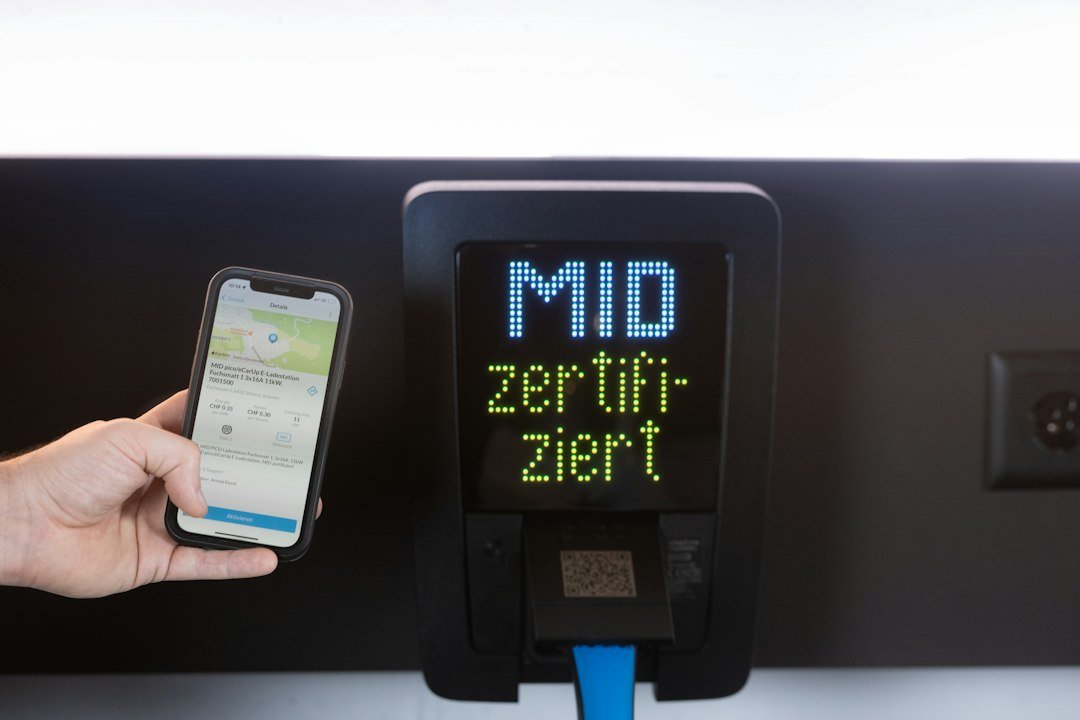
What does good EV after-sales support include?
EV after-sales support is the set of services that helps customers use, maintain and troubleshoot an electric vehicle after purchase. It includes service booking, warranty and battery-health queries, charging assistance, app and connected-feature support, roadside assistance coordination, repair-status updates, complaint resolution and customer education.
The key difference from conventional automotive support is the number of connected systems involved. A single complaint may require coordination between the vehicle, battery-management system, mobile app, charging-point operator, dealer, payment provider and warranty team. The support process must make that complexity invisible to the customer.
Why after-sales experience influences EV retention
Customers judge a brand not only by the vehicle they bought but also by how reliably the company helps them keep moving. KPMG’s India CX Report 2025 for automotive says responsive customer support and a seamless test-drive experience influence retention for 46% of customers; it also reports that 58% of switchers seek good vehicle performance and empathetic support from staff. These findings cover automotive customers broadly, not EV owners alone, but they underline why post-purchase service matters. Read KPMG’s India CX Report 2025: Automotive.
For EV businesses, poor support can compound product or infrastructure friction. A charging fault becomes more frustrating when no one explains whether the issue sits with the vehicle, charger, app or payment system. A warranty delay feels worse when the customer has to repeat the story to every new agent. Retention improves when the company reduces uncertainty, communicates ownership and gives realistic next steps.
The six failure points that damage EV customer satisfaction
1. Customers are passed between teams
Vehicle support, dealer service, charging support and app teams may each own part of the problem. If no team owns the case end to end, the customer becomes the coordinator. Assign one accountable case owner, even when resolution requires several departments.
2. Technical issues are misclassified
“Vehicle not charging” is a symptom, not a diagnosis. The intake process should capture the charger type, location, error message, payment status, vehicle warning, time of occurrence and troubleshooting already attempted. Agents should not diagnose high-voltage battery faults beyond their training or authority; safety-related cases must follow approved escalation procedures.
3. Service and warranty updates are reactive
Silence creates repeat calls and erodes trust. Give customers a case reference, the next expected update time, the current blocker and the action owner. If the timeline changes, communicate before the customer has to chase the team.
4. Charging-network support is disconnected from field operations
A call centre cannot resolve a physically unavailable charger by repeating troubleshooting steps. It needs a route to report faults, check outage status, dispatch field support where appropriate and notify affected users. India’s Ministry of Power issued updated Guidelines for Installation and Operation of Electric Vehicle Charging Infrastructure in September 2024, underscoring the importance of a connected and interoperable charging ecosystem. Support teams should align their outage and escalation workflows with the operator’s actual responsibilities and approved procedures. See the Ministry of Power’s 2024 charging-infrastructure guidance. Measure both communication speed and actual restoration time; they are different outcomes.
5. Knowledge articles do not match real customer language
Customers may describe “range dropping fast” rather than battery degradation, or “payment went through but charger did not start” rather than a charging-session authorisation failure. Build knowledge content around the language customers use, then map it to approved technical categories.
6. The business measures speed but not resolution
Reducing average handling time is not an improvement if customers call back, reopen cases or receive incorrect guidance. Review repeat-contact rate, first-contact resolution, complaint reopen rate, escalation ageing and customer effort alongside speed.
A practical framework: the EV CARE loop
The EV CARE loop is an operational framework for improving post-purchase support. It is an analytical framework, not an industry standard. Use it to review each customer journey from first contact to confirmed resolution.
- Capture: Record the customer’s issue, vehicle or charger context, urgency, location and previous actions once. Avoid making customers repeat information across channels.
- Assign: Route the case to a team with the authority and tools to act. Name an accountable owner and set a next-update deadline.
- Resolve: Follow approved troubleshooting, warranty, service or field-support workflows. Escalate safety-related concerns promptly and do not let automation make unsupported technical claims.
- Evidence: Confirm what was done, whether the customer can use the vehicle or service again, and whether any follow-up remains open. A ticket marked “closed” is not proof that the customer’s problem is solved.
Review failures in the loop weekly. For example, repeated charging complaints may point to a specific location, charger model, payment flow or unclear customer instruction. Support data becomes valuable when it triggers an operational fix rather than simply producing a monthly call-volume report.
Which EV support metrics should leaders track?
Use a balanced scorecard. Define each metric consistently across the contact centre, dealer network, charging operations and digital channels; otherwise, apparent improvement may only reflect different counting rules.
| Metric | What it tells you | Common trap |
|---|---|---|
| First-contact resolution (FCR) | Whether the issue is resolved without another contact for the same reason | Counting a transfer or a premature ticket closure as resolution |
| Repeat-contact rate | How often customers return about the same unresolved issue | Failing to link contacts across phone, chat, app and email |
| Time to first meaningful response | How quickly the customer receives a useful next step | Measuring only an automated acknowledgement |
| Time to resolution | Elapsed time until the customer’s issue is actually resolved | Stopping the clock when a case is transferred to another team |
| Escalation ageing | How long complex or safety-sensitive cases remain open | Reviewing only average time, which can hide very old cases |
| Customer effort / CSAT | How easy it was to get help and how the interaction was perceived | Surveying only customers who had a smooth experience |
| Service and charger restoration time | How quickly a physical or technical service is restored | Confusing the support team’s response time with engineering restoration |
| Retention and repeat purchase | Whether the overall ownership experience supports loyalty | Attributing all retention changes to customer support alone |
Where AI helps—and where human support remains essential
AI is useful when it reduces friction without pretending to have technical authority it does not possess. A hybrid model often works best: automation handles routine information and workflow steps, while trained people manage ambiguity, high-impact complaints and cases that require judgement.
| Use case | Good fit for automation | Human or specialist role |
|---|---|---|
| Service booking | Collect details, show available slots, send confirmations | Resolve exceptions and coordinate unavailable capacity |
| Charging FAQs | Explain approved steps, tariffs, payment status and known outages | Investigate unresolved faults and coordinate field teams |
| Warranty queries | Explain published terms and gather claim documents | Assess disputed, exceptional or technically complex cases |
| Complaint triage | Classify intent, detect repeat issues and flag negative sentiment | Own recovery conversations and make authorised decisions |
| Safety-related reports | Capture key details and trigger the approved escalation workflow | Follow safety protocols and route to qualified personnel |
Automation should use approved knowledge sources, disclose its limits, preserve an audit trail and transfer the conversation with context. A chatbot that repeatedly asks a stranded driver to restart an app is not efficient; it is adding customer effort.
For companies reviewing the wider operating model, business process automation can be relevant where repeatable service workflows need consistent routing and follow-up. A broader contact centre services model may help unify channels, reporting and queue management, depending on the existing technology stack.
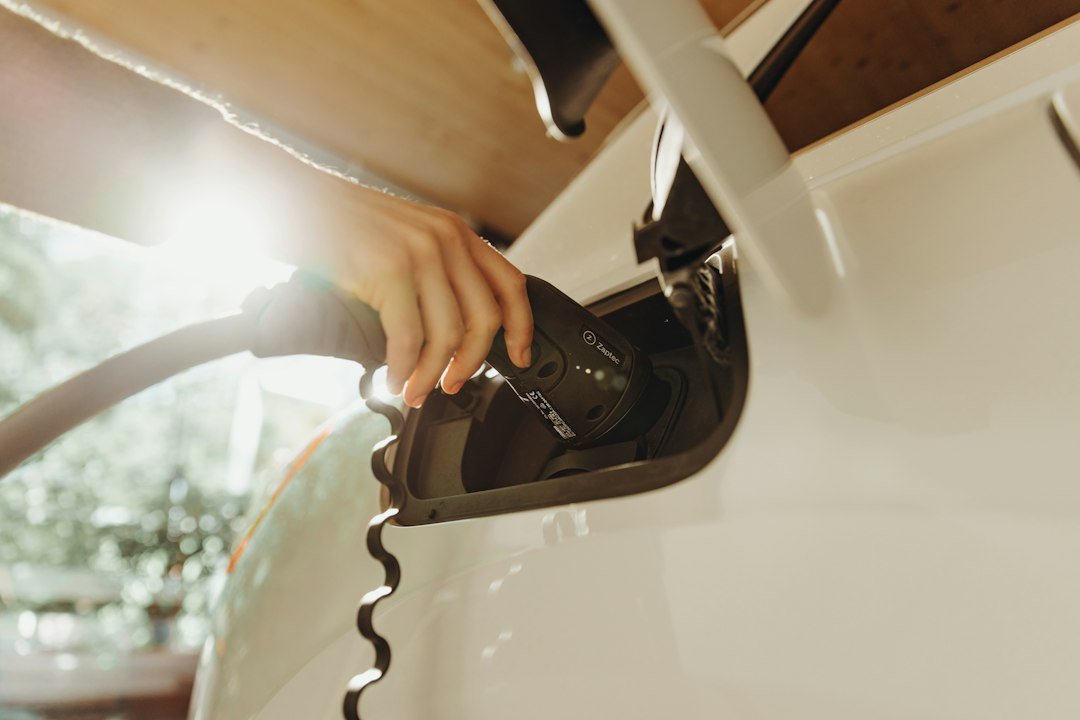
How to build a proactive EV customer-support journey
- At delivery: Explain charging basics, app setup, service booking, warranty boundaries and where to seek help. Check understanding rather than simply handing over a manual.
- During early ownership: Send consent-based, useful reminders about setup, charging behaviour and scheduled service. Make messages relevant to the customer’s model and ownership stage.
- When an issue is reported: Create one case record, confirm the urgency, route to the correct team and set a realistic update commitment.
- While resolution is pending: Send status updates when the case changes or the promised update time arrives. Explain delays in plain language and provide a practical alternative when one exists.
- After resolution: Confirm the customer can proceed, capture feedback and reopen the case if the problem persists. Categorise the root cause for product, service or network owners.
- At recurring friction points: Use complaint trends to improve product instructions, dealer processes, charger reliability, payment flows or support knowledge.
Should an EV company outsource after-sales support?
Outsourcing can make sense when contact volumes fluctuate, multilingual coverage is needed, service hours exceed the in-house team’s capacity, or the business needs a structured layer for customer communication and case coordination. It can also free product and engineering teams from routine status enquiries.
Outsourcing will not, by itself, fix unreliable chargers, slow spare-parts supply, unclear warranty policy or weak dealer accountability. Those require operational owners and service-level commitments outside the contact centre. A provider can manage communication and escalation; it cannot honestly promise resolution of a problem it does not control.
Before selecting a partner, ask how it will:
- Integrate with your CRM, ticketing platform, dealer management system and charging-status tools.
- Use approved troubleshooting content and escalate safety-related cases.
- Keep one case history across voice, chat, email and messaging channels.
- Report repeat contacts, root causes, unresolved cases and customer effort—not just call volume and handling time.
- Protect customer, vehicle and payment information through access controls, audit logs, retention rules and incident procedures.
- Support transition, training, knowledge updates, peak-volume planning and eventual exit or transfer of operations.
For an evaluation of operating models, review customer support outsourcing and compare the operating model against your own case volumes, channel mix, service hours, integration needs and escalation responsibilities.
How much does EV after-sales support cost?
There is no reliable single price for EV support without defining the operating model. Cost depends on contact volume, language coverage, operating hours, channel mix, technical complexity, training requirements, system integrations, quality monitoring and the proportion of cases requiring specialist or field-team coordination.
Common commercial models include dedicated agents priced per seat, shared support teams, per-interaction arrangements, platform or automation fees, and hybrid contracts. Compare total cost of ownership—not only the agent rate. Include transition, knowledge-base preparation, CRM integration, reporting, governance, after-hours coverage and the cost of unresolved cases.
A useful business case compares the current baseline with a proposed model using repeat contacts, cost per resolved case, avoidable escalations, service restoration time and retention indicators. Label assumptions clearly and do not count projected retention gains as guaranteed savings.
Calculate cost per resolved case, not just cost per contact
Use this simple formula: total support operating cost ÷ cases genuinely resolved. Include agent and supervisor time, technology, training, quality monitoring, integration, management overhead and repeat contacts. A cheaper contact that creates a second or third interaction may cost more than a longer interaction that resolves the issue correctly.
Illustrative example—not MasCallNet performance data: if a support operation spends ₹6,00,000 in a month and resolves 3,000 cases, its cost is ₹200 per resolved case. If repeat contacts rise and only 2,400 cases are resolved for the same spend, the cost increases to ₹250 per resolved case. The figures are hypothetical; replace them with your own finance and case-management data before making a sourcing decision.
For a fair comparison, agree on what counts as a resolved case, how repeat contacts are linked, which costs are included and how cases awaiting a dealer, charger operator or engineering team are treated.
A 90-day improvement plan for EV customer experience
| Period | Priority | Deliverable |
|---|---|---|
| Days 1–30 | Diagnose | Baseline metrics; map top contact reasons; identify repeat-contact drivers and unclear ownership |
| Days 31–60 | Standardise | Approved triage scripts, escalation matrix, case-owner rules, update templates and knowledge articles |
| Days 61–90 | Improve and validate | Pilot selected workflows; review quality and customer effort; compare against baseline before scaling |
Start with a small number of high-volume, high-friction journeys—such as charging failures, service booking or warranty-status enquiries. A controlled pilot reveals whether the change improves resolution, or merely moves work from one team to another.
Frequently asked questions
What is EV after-sales support?
It is the support provided after an electric vehicle is purchased, including service booking, warranty guidance, charging assistance, app support, repair updates, roadside assistance coordination and complaint resolution.
How can EV manufacturers improve customer satisfaction?
Reduce handoffs, provide accurate troubleshooting, set clear update commitments, coordinate dealers and charging operators, and confirm that the issue is resolved before closing the case.
Why is charging support important for EV customer retention?
Charging is central to everyday vehicle use. When customers cannot tell whether a problem is caused by the vehicle, charger, app or payment process, clear ownership and timely status updates can reduce uncertainty and effort.
Can AI handle EV customer service?
AI can assist with approved FAQs, booking, status updates, intent classification and case routing. Technical ambiguity, disputed claims and safety-related reports need defined human or specialist escalation.
Which metrics matter most in EV customer support?
Track first-contact resolution, repeat-contact rate, time to resolution, escalation ageing, customer effort or CSAT, and service-restoration time. Pair speed metrics with evidence that the issue was actually fixed.
Should EV customer support be available 24/7?
Coverage should reflect vehicle usage, charging-network hours, customer expectations and incident severity. If round-the-clock support is not feasible for every issue, publish clear hours and provide a reliable path for urgent or safety-related cases.
When should EV companies outsource support?
Consider outsourcing when volumes, languages, channel coverage or operating hours exceed internal capacity. Retain clear internal ownership for product decisions, warranty policy, engineering fixes and service-network performance.
What should an EV support outsourcing contract include?
Define channels, hours, scope, training, approved knowledge, response and resolution definitions, escalation paths, data access, quality sampling, reporting, change control, business continuity and exit assistance.
How can companies reduce repeat calls about the same EV issue?
Link contacts across channels, give every case a shared identifier, preserve troubleshooting history, assign an accountable owner and analyse recurring reasons. Do not make customers restart the process after a transfer.
Does outsourcing guarantee better customer retention?
No. Retention also depends on product reliability, charging access, pricing, warranty policy and service-network execution. Outsourcing can improve support operations, but outcomes should be measured against a baseline and not guaranteed in advance.
Make after-sales support a measurable part of the EV ownership experience
EV customer retention is shaped by the moments when ownership becomes difficult: a charger is unavailable, a repair takes longer than expected, or a customer cannot get a clear answer. The practical response is to connect customer communication with accountable case ownership, specialist escalation and operational learning.
If you are reviewing your EV customer-support model, discuss your contact centre requirements with MasCallNet. Bring your main contact reasons, channels, coverage requirements and current service metrics; these are the starting point for a meaningful assessment.
Image credits: Dextar Studio / Unsplash (service workshop image); smart-me AG / Unsplash (charging-app support image); Zaptec / Unsplash (charging equipment image).