
Process Optimization for Customer Engagement: Boost CX, Retention & Revenue (2026)
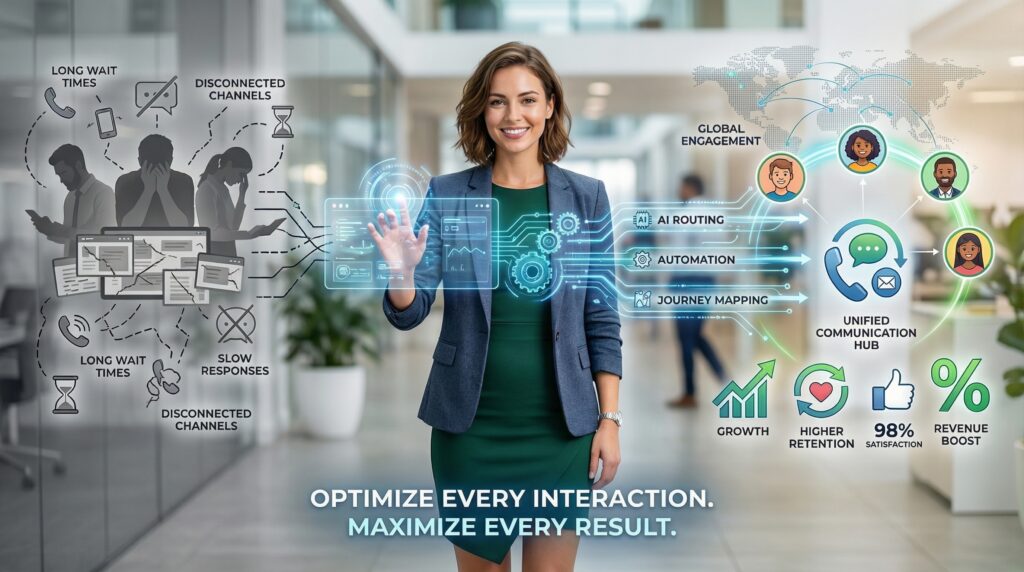
Process optimization for customer engagement is the structured redesign of customer experience workflows using AI, automation, and analytics to improve efficiency, reduce operational costs, and enhance customer satisfaction. It enables enterprises to deliver scalable, consistent, and data-driven CX across global operations.
What Is Process Optimization in Customer Engagement?
Process optimization in customer engagement refers to the continuous improvement of customer interaction workflows by integrating AI, automation, and data intelligence. It focuses on eliminating inefficiencies, enhancing service quality, and enabling scalable CX operations across channels.
Unlike traditional customer service outsourcing, which relies heavily on human agents, modern optimization combines automation with human expertise to deliver faster, more consistent, and cost-effective outcomes.
Why Process Optimization Is a Strategic Priority in 2026
Enterprise CX leaders are facing increasing pressure from:
- Rising customer expectations for instant support
- High operational costs in legacy contact center outsourcing models
- Talent shortages in global service operations
- Regulatory compliance and data governance requirements
According to insights from Gartner Customer Service Research, AI-driven CX models are becoming the standard for scalable and efficient operations.
Key Business Drivers
- Cost Reduction: 30–60% operational savings through automation
- Scalability: 24/7 service across geographies
- Consistency: Standardized service delivery
- Customer Retention: Improved response time and personalization
Key Insights at a Glance
- AI resolves up to 70% of routine customer queries
- Hybrid CX models improve first-contact resolution by 25–40%
- Process optimization reduces average handling time by 20–50%
- Enterprises see up to 45% cost savings in optimized CX environments
- Data-driven CX improves retention and lifetime value
AI vs Human Agents: The Hybrid CX Model
AI Chatbots
- Handle repetitive, high-volume interactions
- Provide instant responses
- Operate 24/7
Human Agents
- Manage complex and sensitive interactions
- Provide empathy and contextual understanding
- Handle escalations
Hybrid CX Architecture
The most effective model integrates:
- AI automation
- Human expertise
- Intelligent routing systems
This hybrid approach enables enterprises to optimize both cost and experience simultaneously.
Enterprise Use Cases Across Industries
1. BFSI (Banking, Financial Services, Insurance)
- Fraud detection alerts automated via AI
- Customer onboarding optimized with automation
- Regulatory compliance workflows standardized
Relevant domains include financial services outsourcing and insurance bpo.
2. Healthcare Systems
- Patient support automation
- Appointment scheduling optimization
- Compliance with data protection regulations
Aligned with healthcare outsourcing services.
3. Retail & eCommerce
- AI-driven customer support
- Real-time order tracking
- Personalized recommendations
4. Telecommunications
- High-volume query handling
- Technical support automation
- Customer churn reduction
Strategic Framework for Process Optimization
Step 1: CX Workflow Assessment
- Identify inefficiencies in current operations
- Map customer journeys
- Analyze interaction data
Step 2: Automation Opportunity Identification
- High-volume repetitive tasks
- Low-complexity queries
- Back-office processes
Applicable across back office outsourcing services and knowledge process outsourcing.
Step 3: Technology Integration
- AI chatbot deployment
- CRM and Cxm integration
- Workflow automation tools
Step 4: Operating Model Redesign
- Shift from siloed teams to integrated CX ecosystems
- Enable AI-human collaboration
- Standardize global operations
Step 5: Continuous Optimization
- Monitor KPIs
- Use analytics for improvement
- Implement feedback loops
Implementation Architecture
Core Components
- AI chatbot layer
- Human agent workforce
- Orchestration engine
- CRM/CXM platforms
- Analytics dashboard
Key Capabilities
- Real-time routing
- Predictive analytics
- Omnichannel engagement
Business Benefits & ROI
Quantified Example
A global enterprise implementing AI-driven process optimization achieved:
- 45% reduction in operational costs
- 35% faster response times
- 28% increase in customer retention
- 50% reduction in manual workload
Operational Efficiency Gains
- Reduced agent workload
- Faster query resolution
- Improved service consistency
Revenue Impact
- Increased customer lifetime value
- Higher conversion rates
- Improved brand loyalty
Governance, Risk & Compliance
Data Governance
- Secure data handling
- Access control mechanisms
- Encryption standards
Vendor Risk Management
- Performance monitoring
- SLA enforcement
- Multi-vendor strategy
AI Oversight
- Bias detection frameworks
- Human-in-the-loop validation
- Ethical AI implementation
Cross-Border Compliance
- Data sovereignty regulations
- Regional compliance alignment
- Secure data transfer protocols
Workforce Continuity Planning
- Remote workforce enablement
- Disaster recovery strategies
- Business continuity frameworks
Comparison Table
| Model | Strengths | Limitations | Best Use Case |
| AI-only CX | Low cost, scalable, 24/7 | Limited human empathy | High-volume support |
| Human-only CX | High empathy, complex problem solving | Expensive, limited scalability | Premium customer interactions |
| Hybrid CX | Balanced efficiency and experience | Requires integration & governance | Enterprise CX transformation |
Vendor Selection Criteria
When selecting a CX partner, enterprises should evaluate:
- AI and automation capabilities
- Industry expertise
- Global delivery model
- Compliance certifications
- Integration capabilities
- Transparent pricing
Case Study Example
Global Retail Enterprise
Challenge: High customer support costs and inconsistent service
Solution:
- AI chatbot deployment
- CRM integration
- Process optimization
Results:
- 40% cost reduction
- 30% faster response time
- Improved customer satisfaction
How to Implement Process Optimization
- Conduct CX maturity assessment
- Identify automation opportunities
- Select technology stack
- Redesign operating model
- Implement governance frameworks
- Monitor and optimize continuously
FAQ
How can enterprises reduce customer support costs?
By implementing AI-driven automation and optimizing workflows, enterprises can reduce operational costs by up to 60% while maintaining service quality.
Is outsourcing better than in-house CX operations?
Outsourcing offers scalability, cost efficiency, and access to advanced technologies when supported by strong governance frameworks.
What is the role of AI in customer engagement?
AI enables automation, predictive insights, and real-time decision-making, improving both efficiency and customer experience.
What risks should enterprises consider?
Key risks include data security, compliance issues, vendor dependency, and AI bias. These require structured governance and oversight.
How does process optimization improve customer retention?
Faster response times, personalized interactions, and consistent service delivery lead to higher customer satisfaction and loyalty.
Conclusion
Process optimization for customer engagement is a critical enabler of enterprise-scale CX transformation. By integrating AI, automation, and human expertise, organizations can achieve significant cost reductions, improve efficiency, and enhance customer satisfaction.
Modern enterprises are moving beyond traditional bpo call center models toward intelligent, hybrid CX ecosystems that deliver measurable business outcomes.
Industry providers such as Mascallnet represent the shift toward AI-driven CX and outsourcing transformation, enabling organizations to align technology, operations, and governance.